
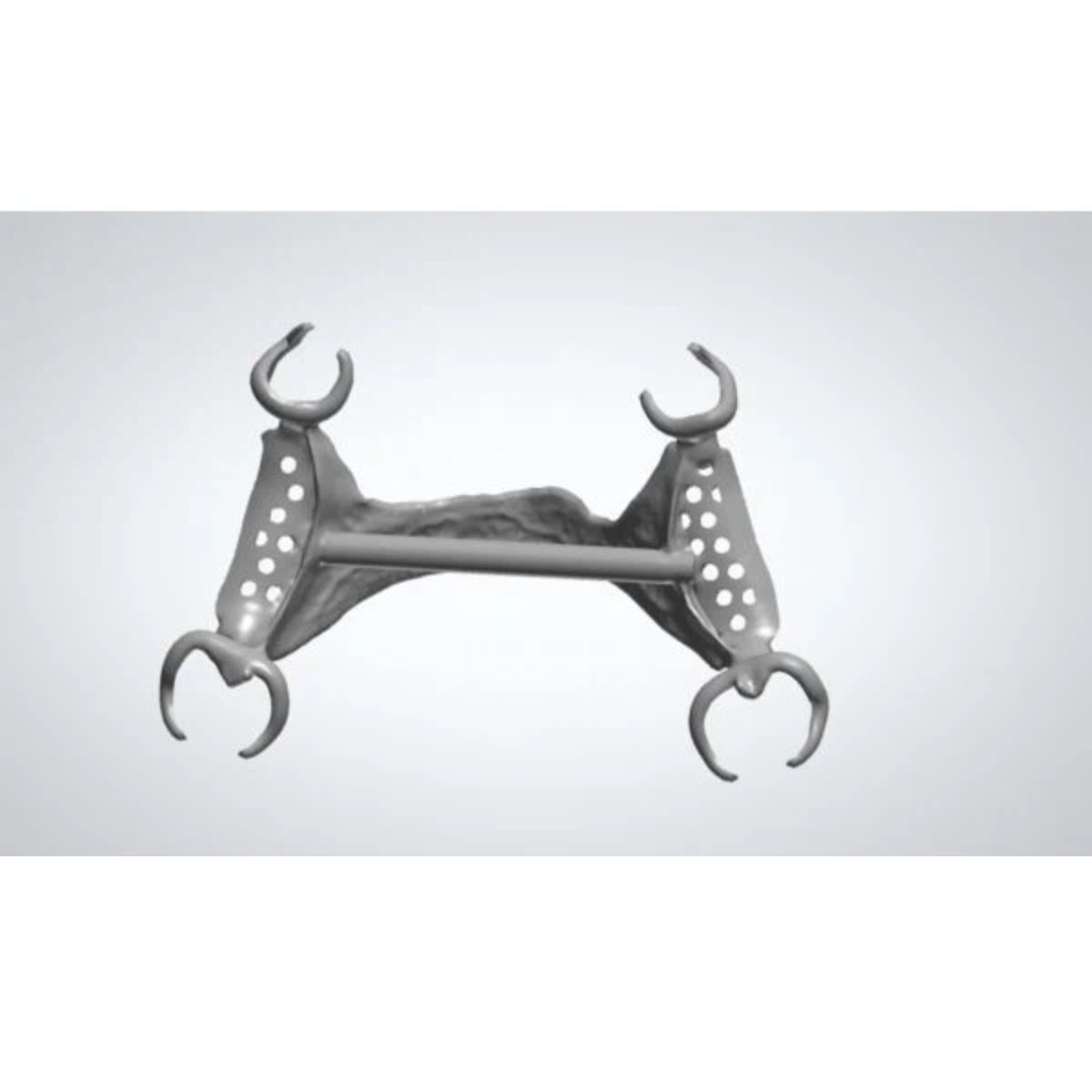
RPD Framework & Flexible Partial Design Service (Cast Metal/Valplast)
Precision surveying for Cast Metal & Flexible Frameworks.
- Types: SLM Metal Frameworks, Flexible Partials (Valplast/TCS), Acetal Clasps.
- Engineering: Digital Surveying & undercut optimization (0.25mm – 0.50mm).
- Clasps: RPI, RPA, Akers, Ring Clasps tailored to tooth contour.
- Turnaround: 24 Hours (Overnight).
Production-ready STL files for 3D Printing (Resin/Wax) or Laser Sintering (SLM).
- Expertly crafted digital dental designs tailored to your clinic’s needs
- Fast turnaround times – on-time delivery, every time
- Competitive pricing with global quality standards
- Dedicated support from experienced dental designers
- 100% satisfaction guarantee – or your money back
Mastering the Path of Insertion.
Designing a Removable Partial Denture (RPD) requires precise biomechanics. The challenge is balancing Retention with Ease of Insertion. Traditional manual surveying is prone to human error.
Our RPD Design Service utilizes advanced Digital Surveying in 3Shape/Exocad. We identify the ideal path of insertion, measure the exact undercut depth (0.010″ vs 0.020″), and block out interferences to ensure the framework seats passively without damaging the abutment teeth.
Technical Engineering Specs
We tailor the design based on your manufacturing material (Metal vs. Flexible):
Cast Metal Frameworks (SLM/Cast)
- Clasp Design: Tapered specifically for Cobalt-Chrome or Titanium flexibility.
- Major Connectors: Rigid Lingual Bars (pear-shaped) or A-P Straps designed for hygiene.
- Finish Lines: Sharp and defined acrylic finish lines for clean resin transition.
- Rest Seats: Accurate fit to prepped rest seats to direct forces down the long axis.
Flexible Partials (Valplast/TCS)
- Clasp Thickness: Increased bulk to compensate for material flexibility.
- Retentive Undercuts: Utilizing deeper undercuts (0.50mm+) for reliable snap-fit.
- Tissue Relief: Optimized block-out to prevent gingival impingement.
Why Outsource Frameworks?
Designing a framework is a tedious process of blocking out, waxing, and finishing. By outsourcing to China Dental Designs, you bypass the design bottleneck. Whether you are printing wax patterns for casting or sending files directly to an SLM (Laser Sintering) machine, our files are ready to go.
Submission Workflow
- Scan: Upload Intraoral or Desktop scans. Ensure Rest Seats are clearly visible.
- Specify: Material (Metal vs. Flexible) and Major Connector preference (e.g., Lingual Plate).
- Receive: Download the STL file by 8:00 AM EST.
Complex Kennedy Class?
Send us a Kennedy Class I or II case. We will optimize the indirect retention for you.
Email your STL files to: chinadentaldesigns@gmail.com
Be the first to review “RPD Framework & Flexible Partial Design Service (Cast Metal/Valplast)”
Please provide a valid email address to receive your order confirmation before shipping. Thank you!

Reviews
There are no reviews yet.